Wednesday, 19 December 2012

Monday, 17 December 2012
We have acquired the Props!
We have now brought in all the props we need for filming. As a group we have all contributed and brought in all the props that were available: we can now see that our film will look very exciting and intriguing for the audience with the diverse range of props acquired! Here are some of the main props we will use:


Costumes! We now have a balaclava, a number of bandannas and scarfs, army vests and even a wig. By raiding our school's drama prop room we were able to find numerous amounts of suitable props we could use in our film, for instance, the army vests, trousers and a wig. All of this clothing will be worn by the terrorist actors and will create a realistic and intimidating portrayal of these characters.


Here are the replica guns we will be using. These look extremely realistic and will tell the audience that these terrorists are not messing around! These props will be essential to create an exciting and thrilling conveyance of the scenes.

An extra additional prop is the terrorist banner, which I created myself! Making this banner took a long period of time: using a large white piece of cloth as a base I then outlined bold Arabic writing onto it and filled it in with a thick, black, board marker. I got the template of the Arabic writing by using Google Translate and adding the statement "I will find you and I will kill you." from here I could copy it onto the cloth. Once this was finished it looked intensely effective and I knew it would look fantastic as a prop in our film!

We also have a costume for the hostage, this is a plain white shirt which we have covered in red food colouring to give the effect of stained blood - gruesome!

Another extremely important prop - the briefcase. We have now got a silver metal briefcase to represent the sacred stainless steel object which everyone desires to have.

We also acquired other miscellaneous props such as the ransom video camera, the tools of torture and the torturers costume. The ransom video camera was a prop that was found in school - this camera was very old and didn't work, nevertheless, it worked great as a prop! The tools of torture were random tools that were available and brought in by all of us - this made up a hefty bulk of crude and sinful torture tools that we knew would look very menacing and horrific. The tortures costume consisted of an apron and dust mask - we covered the apron and dusk mask in red and brown paint to represent blood and dirt. This will create a creepy and terrifying portrayal of this character.
Friday, 14 December 2012
Wednesday, 21 November 2012
Tuesday, 20 November 2012
Storyboard Animatic
Here is the finished animatic for our film which Alex and Ed have created using my storyboards:
Saturday, 10 November 2012
Character List
This is the character and cast list for our film; it shows who will be acting as each character in each separate part.
We have tactically chosen who each specific person will be acting which character. We have asked pupils who are in a different group in our class to act for us. This will allow us to get our filming finished more quickly - without any hassles of trying to find the actors each time we film. We have chosen James Henson and Taylor Jones to star in our film; they are both extremely enthusiastic (with James Henson having experience in the area of drama) and should attribute nicely to our film. Ed Smith, Alex Rose and I will be playing several roles in our film: this is simply due to the factor of time, issues may arise if we have too many actors, e.g. we will need to find them each time we film, some may be busy when we need to film. Ed and Alex will be playing the main roles as I will be the main camera man for our film.
Tuesday, 16 October 2012


Change in Narrative and Development of an Alternative Ending
 An unexpected issue has arised. Our media teacher has informed us that we will not be allowed to use the feature of drugs within our storyline; this has resulted in a dilemma as we will now need to conjure up a completely different idea for part 2 (which will still suit our whole storyline). The reasons we will be unable to use drugs in our film is because of how the audience will see them as a cliché (drugs may be seen as overused in modern films). There is also the health and safety issues involved, despite using props, if we were to use a real syringe there would be a great risk in accidentally harming ourselves.
As we are not allowed to use drugs as a storyline basis, as a group we have reviewed and discussed a limited amount of different ideas we could use to replace it. In result, we have thought up a new idea still involving the similar features of our original idea. Instead of our main character being the trafficker and dealer of the terrorist's drugs, instead he will be an escort of a product held within a brief case which he is suppose to deliver to someone. I have re-created the storyboard for part 2; below I will explain in detail our new narrative of our film.
New Part 2 of the Storyboard
 Continuing on from part 1 of the storyboard, the scene has now cut into a flashback - the scene is now part 2. This scene starts with a pan across the seam of a briefcase, where it follows to show the flicking of the latches and the main character opening the briefcase. By using a briefcase we can create an enigma - throughout the whole film we will not reveal to the audience what is inside the briefcase. The main character is sat across a table with another mystery character (this will be the man he is allied and involved in stealing the product with), as he turns the opened briefcase to show the man, the camera movement will move and rotate so the contents is hidden (as shown in clip 5 of the storyboard). This scene carries on with a number of shot/reverse/shots as the two characters are deep in conversation about what is happening and what they are going to do.
Suddenly there is several sharp bangs at the door - the terrorists have found them. The two characters are in shock and need to escape. The main character tells his accomplice to grab the briefcase as they both head for the backdoor; as they leave, the front door is broken down and the following scene cuts to a chase. As they run out the building, it leads to an open woods - this is where the two characters separate and the chase continues. At this point, there is a point-of-view shot from the main character looking back at the man chasing him, and as he turns to look ahead of him he is suddenly knocked out by another terrorist hiding behind a tree. The scene then cuts to black, this is the end of part 2, where part 3 is to follow.

Alternative Ending

The twist for our film may seem complex to understand, however, we intend to include the twist in attempt to confuse the audience about what happens in the film, leaving them with many unanswered questions which they will question themselves about. This twist happens at the very end of the film. Looking at part 4 when the hostage is 'saved' by a mystery character, who is not revealed (shown in shot 5 of part 4), followed by the bright light when the bag is taken off the hostages head, the audience think that this man has been saved and is now safe. On the other, this is where our twist will come in. As the bag is taken off the hostages head and he sees the bright light, the white screen will then fade to black. This is where the repeatedly used shot 13 from part 1 (shown below) will again occur. The film will cut back to this same scene from part one, however, now when the gun shot is fired it will be from the gun held to the hostages head.
The audience will be left confused and wondering whether the previous scene of part 4 actually happened, or did the terrorist shoot the hostage? There will be no real answer and this will be left as an enigma.

(Part 4: Shot 5 and 6)

(Part 1: Shot 13)

(The End)
Friday, 12 October 2012
Thoughts on Setting

Here was an idea of the shot we would have used for part 1 & 3 comparing them to the storyboard:


To our fortune, nostalgia of my previous groups AS preliminary gave us an alternative setting we could explore. Back to the manor basement it was! This setting would also work very effectively. Alike my garage walls, the manor basement also had a rustic, crude atmosphere to it. The limit on light created many shadows which would allow our film to conform to the conventions of a crime thriller. As we needed four different settings, the manor offered several places we could film.
Exploring the manor we found an appropriate room to use as the setting for the ransom video in Part 1 and Part 4. This room consisted of a lot of low key lighting and shadows, as well as derelict, worn walls. This room could effectively convey a decaying and isolated atmosphere which would be ideal for this scene in our film. We also found a suitable room within the manor basement for Part 3. This room gave off all the similar effects, with the essential feature of shadows and low key lighting. We searched many rooms to find a setting for Part 2. As we needed a high positioned window due to the narrative of our film it took a long time to find a room that was suitable - however after exploring we indeed finally found one. By moving much of the furniture we could create the scene for Part 2. The chase scene in Part 2 of the narrative is set in a woods. As there are quite a few woods located around the schools area so this factor did not come as problem. Behind the manor was the perfect place to film this scene; the wide area of field and placement of trees meant we could achieve all the running shots we wanted.
Here is the setting we will use for the ransom video of Part 1 & 4:


Here is the room we will use for the start of Part 2:


This is the woods we will use to film the chase scene:


This is the room for the torture scene of Part 3 (also located in the manor basement):


Thursday, 11 October 2012
Rough Idea Storyboards
Here I have faced the challenge of creating the storyboards for our film. I have started sketching the storyboard; I have created sketches for each different shot and use of camerawork in each scene. Each page is listed for each specific scene - Part 1: Ransom Video, Part 2: Kidnapping Scene, Part 3: Torture Scene and Part 4: Ending. I have used arrows within each shot to portray the camera movement, while also using colour to show what the focus will be on. For each part I have numbered the shots in order and added short and basic captions explaining the shot.

Here are the results on the development of the storyboards:


I was unable to finish the storyboard for part 2 due to the unfortunate change in narrative.


Thursday, 4 October 2012
Initial Ideas for the Narrative
As a group we have developed and discussed the main ideas involved within our film. From looking at our initial ideas on the prezi, we combined and shaped particular factors to create a continuous and chronological storyline. We could then link different sections of our story to develop an intriguing and diverse plot which will leave the audience thrilled and wanting to see more. After knowing our narrative we knotted the different sections in different orders to create a sense of focused confusion and enigma. Here are the four parts to our storyline:
Part 1 - Ransom Video (Present):
This first scene is set in the present and will picture a hostage tied to a chair with a sack over his head in a terrorist situation. Here the terrorists are holding the hostage for ransom and in result are making a ransom video. This scene follows on till the superior terrorist puts a gun to the hostages head and a shot is fired (it then cuts to part 2 or the film). In this scene no questions are answered, an enigma is created as the audience are left in the dark - not knowing who these people are, why they are there or what they want. The setting for this scene will be in a dark, isolated and derelict room/building - a great place to use for this scene would be the basement of the manor at school. The basement is a very dark and isolated place which would be an advantage in creating a eerie atmosphere through the use of shadows and general shabby, run-down effect.
Part 2 - Kidnapping (Past):
When the shot is fired at the end of part 1 there is a flashback - this kidnapping scene is set in the past and will be explaining and answering some of the audiences questions. This scene involves the main character (hostage in part 1) with another companion in a small, claustrophobic room taking class A drugs, such as heroin and cocaine. The audience now know how these characters are involved with the terrorists; these two characters are involved in drug trafficking and instead of selling the drugs and paying the terrorists the money, they have been using the drugs themselves for personal use. Their drug taking is interrupted when a sudden bang is heard (a door being knocked down), this then leads up to the characters running out of the building and a chase scene through a woods outside. When running through the woods one of the terrorists jumps out and suddenly knocks the main character out - this cuts to a black out and follows on to part 3.
Part 3 - Torture Scene (Past):
The torure scene carries on from part 2 and is still in the past. The hostage (main character) wakes up to find himself tied up to a chair in a tiny room with just one hanging bulb as a source of light. There is another man in the room - this is the torturer - he is stood next to a table smoking and observing his tools of torture. This scene prolongs showing the intimidation the torurer is creating and the fear of the main character. When the hostages face is slashed and blood splatters on the wall the clip quickly blacks out and cuts back to the last shot of part 1 (when the gun is pressed to the hostages head). This is the beginning of part 4. For this scene, again the basement in the manor can be used as the low key light is vital in this scene to create fear and uneasiness to the audience.
Part 4 - Ending (Present):
This is set in the present, in the same scene as part 1and in perspective is actually just continuing from part 1. The last shot from part 1 when the gun is pressed against the hostages head and a shot is fired is now repeated. Following with a short black out. However, this now continues with the hostage opening his eyes and realising he has not been shot. The terrorists are confused with who has fired a gun and the superior terrorist orders his guards to search and find who it is. A terrorist grabs the sack and wraps it over the hostages head. The rest of this scene will be shown through a point-of-view shot of the hostage looking through the sack; all he can see is blurry figures and sudden flashing lights - he can hear shouting and guns rapidly firing. All this soon comes to a halt and there is silence and no movement. A single blurry figure stands infront of him and a flash of white light overcomes the screen as the sack is taken off his head.
This is the ending to our film. We intend on leaving the audience stunned, yet intrigued to find out who this man was and what happens next.
Part 1 - Ransom Video (Present):
This first scene is set in the present and will picture a hostage tied to a chair with a sack over his head in a terrorist situation. Here the terrorists are holding the hostage for ransom and in result are making a ransom video. This scene follows on till the superior terrorist puts a gun to the hostages head and a shot is fired (it then cuts to part 2 or the film). In this scene no questions are answered, an enigma is created as the audience are left in the dark - not knowing who these people are, why they are there or what they want. The setting for this scene will be in a dark, isolated and derelict room/building - a great place to use for this scene would be the basement of the manor at school. The basement is a very dark and isolated place which would be an advantage in creating a eerie atmosphere through the use of shadows and general shabby, run-down effect.
Part 2 - Kidnapping (Past):
When the shot is fired at the end of part 1 there is a flashback - this kidnapping scene is set in the past and will be explaining and answering some of the audiences questions. This scene involves the main character (hostage in part 1) with another companion in a small, claustrophobic room taking class A drugs, such as heroin and cocaine. The audience now know how these characters are involved with the terrorists; these two characters are involved in drug trafficking and instead of selling the drugs and paying the terrorists the money, they have been using the drugs themselves for personal use. Their drug taking is interrupted when a sudden bang is heard (a door being knocked down), this then leads up to the characters running out of the building and a chase scene through a woods outside. When running through the woods one of the terrorists jumps out and suddenly knocks the main character out - this cuts to a black out and follows on to part 3.
Part 3 - Torture Scene (Past):
The torure scene carries on from part 2 and is still in the past. The hostage (main character) wakes up to find himself tied up to a chair in a tiny room with just one hanging bulb as a source of light. There is another man in the room - this is the torturer - he is stood next to a table smoking and observing his tools of torture. This scene prolongs showing the intimidation the torurer is creating and the fear of the main character. When the hostages face is slashed and blood splatters on the wall the clip quickly blacks out and cuts back to the last shot of part 1 (when the gun is pressed to the hostages head). This is the beginning of part 4. For this scene, again the basement in the manor can be used as the low key light is vital in this scene to create fear and uneasiness to the audience.
Part 4 - Ending (Present):
This is set in the present, in the same scene as part 1and in perspective is actually just continuing from part 1. The last shot from part 1 when the gun is pressed against the hostages head and a shot is fired is now repeated. Following with a short black out. However, this now continues with the hostage opening his eyes and realising he has not been shot. The terrorists are confused with who has fired a gun and the superior terrorist orders his guards to search and find who it is. A terrorist grabs the sack and wraps it over the hostages head. The rest of this scene will be shown through a point-of-view shot of the hostage looking through the sack; all he can see is blurry figures and sudden flashing lights - he can hear shouting and guns rapidly firing. All this soon comes to a halt and there is silence and no movement. A single blurry figure stands infront of him and a flash of white light overcomes the screen as the sack is taken off his head.
This is the ending to our film. We intend on leaving the audience stunned, yet intrigued to find out who this man was and what happens next.
Friday, 28 September 2012
Thursday, 20 September 2012
Existing Film Research
We have researched and analysed a variety of different existing films - exploring different genres where some specific scenes are based around similar events that relate to the ideas of our film we will be creating. When first looking for a similar film we looked mainly at the thriller and crime genre films - our first instinct was to observe the torture scene in the film Reservoir Dogs; this scene was very inspiring as we could absorb a whole range of different factors such as lighting, sound and camera work. We also looked into several other films - these being Taken, Dead Man's Shoes, Stormbreaker and Iron Man. As a group we found all of these films influential in different areas. These are the researched films that our group will be analysing for different scenes of our film:

Iron Man - I will be analysing a scene from Iron Man: this has inspired us for the beginning of our film, which will start by the recording of the ransom video by the terrorists.

Taken - This film will be analysed by Alex. We found this film's kidnapping scene very influential - giving us a concept of what we can achieve and use for this scene.

Reservoir Dogs - The torture scene from this film gave us great insight into how we could perform the torture scene in our own film. Ed will be analysing this film.
Looking at the costumes, it again relates to our film. We look to create a resemblance of the stereotypical terrorists: wearing scruffy clothing and rags with their faces hidden through bandannas and balaclavas. This creates mystery, who are these people? Through the use of effective costumes we can elevate the feeling of intimidation - not only will the main character be feeling uneasy, but so will the audience. The props will reinforce this feeling. The terrorists in the Iron Man scene are equipped with heavy-duty firearms, this tells the audience that they are not fooling around. In our own film we will be using replica guns for this scene - this will increase the sense of reality and create a much more powerful atmosphere to the harshness of this scene.
The camera work used has also helped us. Many point-of-view shots are involved, letting the audience see what Tony Stark is looking at. We are put in his shoes and from this can interpret how he is feeling. Similarly, we will be doing the same; by using a number of P-O-V shots we can involve the audience and make them absorb the feelings of the hostage in distress. More camera techniques will be used such as close ups, focus pulls and zooms: these will all be used to portray different feelings to the audience. Close ups will be used when focusing on objects - this guides and focuses all of the audience's attention to what is important in the scene, for instance, a close up to show the hostages expression which conveys emotions to the audience. In addition, focus pulls will be used to change the focus from object to object - this again guides the attention of the audience, however, in an effective subliminal way. Zooms will be used to change the perspective of the scene. For example, a close up of the hostages face will be followed by zooming out to show that the situation is much bigger than the audience thinks. This technique will also give the audience more information about what is happening in the scene.

Iron Man - I will be analysing a scene from Iron Man: this has inspired us for the beginning of our film, which will start by the recording of the ransom video by the terrorists.

Taken - This film will be analysed by Alex. We found this film's kidnapping scene very influential - giving us a concept of what we can achieve and use for this scene.
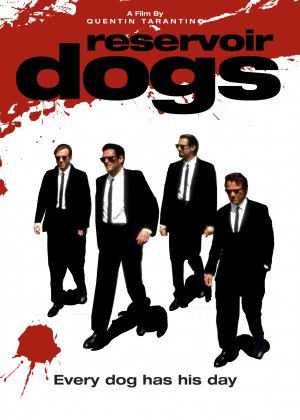
Reservoir Dogs - The torture scene from this film gave us great insight into how we could perform the torture scene in our own film. Ed will be analysing this film.
Iron Man
The film Iron Man has a very similar genre to our film - this being crime, terrorism and thriller - however, explores it in a different way due to the general narrative of the film. On the other hand, a scene that links almost perfectly with the ideas of our own film is the ransom video scene. This scene is exactly how we portrayed our own scene - enabling us to be greatly inspired through its conventions of media. Firstly, I have looked at the mise-en-scene used. The low key lighting used throughout all of the ransom video scene creates a strong and harsh atmosphere as the main character (Tony Stark) becomes in realisation of the critical situation he is in. This is the same atmosphere we look to convey: the main character in our film has been kidnapped and is being held for ransom, his feelings of vulnerability and inferiority needs to be shown through the low key light as darkness shows the coldness, harshness and loneliness of the situation he is in.Looking at the costumes, it again relates to our film. We look to create a resemblance of the stereotypical terrorists: wearing scruffy clothing and rags with their faces hidden through bandannas and balaclavas. This creates mystery, who are these people? Through the use of effective costumes we can elevate the feeling of intimidation - not only will the main character be feeling uneasy, but so will the audience. The props will reinforce this feeling. The terrorists in the Iron Man scene are equipped with heavy-duty firearms, this tells the audience that they are not fooling around. In our own film we will be using replica guns for this scene - this will increase the sense of reality and create a much more powerful atmosphere to the harshness of this scene.
The camera work used has also helped us. Many point-of-view shots are involved, letting the audience see what Tony Stark is looking at. We are put in his shoes and from this can interpret how he is feeling. Similarly, we will be doing the same; by using a number of P-O-V shots we can involve the audience and make them absorb the feelings of the hostage in distress. More camera techniques will be used such as close ups, focus pulls and zooms: these will all be used to portray different feelings to the audience. Close ups will be used when focusing on objects - this guides and focuses all of the audience's attention to what is important in the scene, for instance, a close up to show the hostages expression which conveys emotions to the audience. In addition, focus pulls will be used to change the focus from object to object - this again guides the attention of the audience, however, in an effective subliminal way. Zooms will be used to change the perspective of the scene. For example, a close up of the hostages face will be followed by zooming out to show that the situation is much bigger than the audience thinks. This technique will also give the audience more information about what is happening in the scene.
Subscribe to:
Comments (Atom)